Jump to content

Puffer

Members
  • Posts

    1,954
  • Joined

  • Last visited

  • Days Won

    42

Puffer last won the day on November 28

Puffer had the most liked content!

4 Followers

Profile Information

  • Birth Sex
    Male
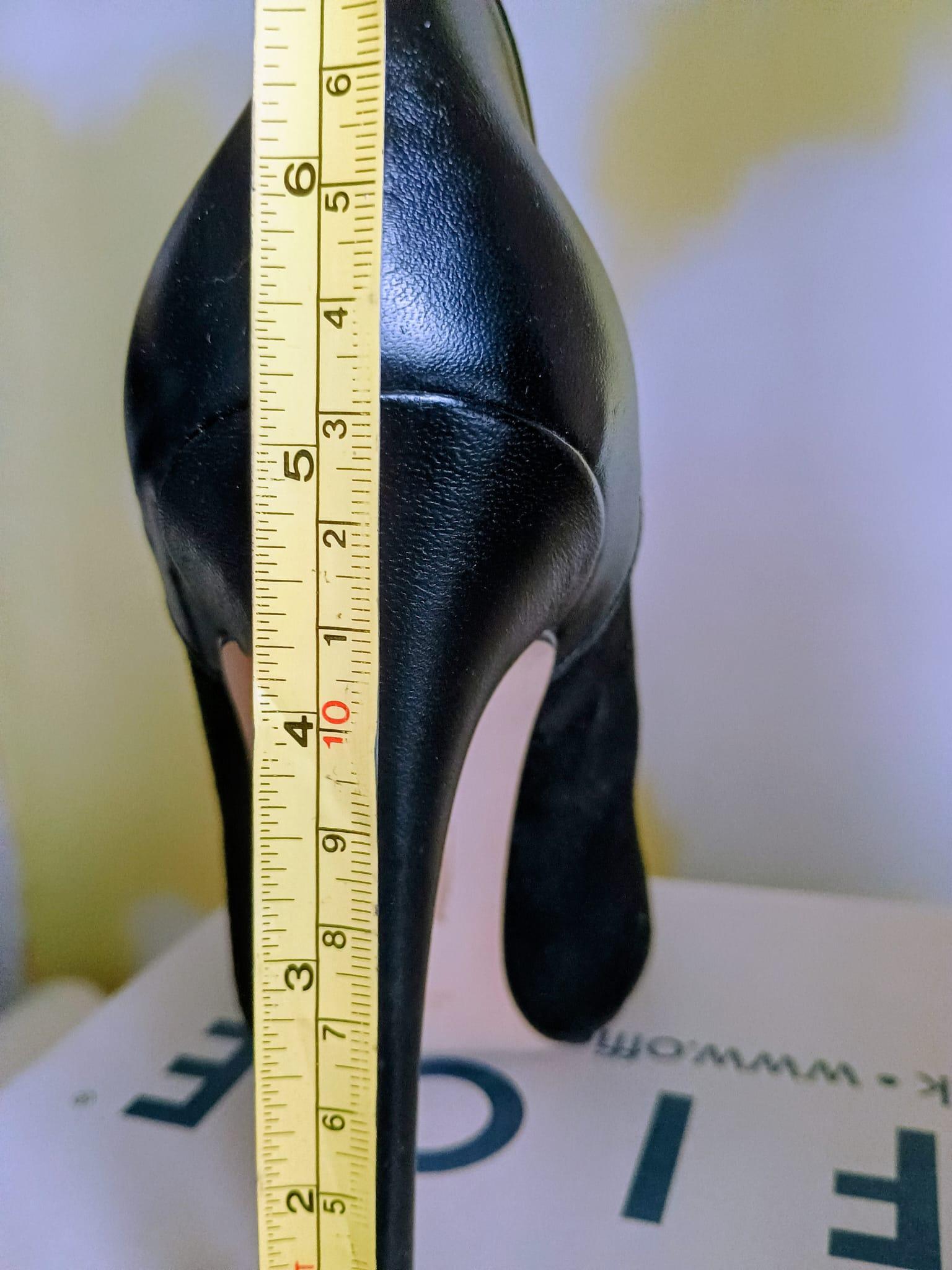
  • Country
    Kent, England
  • Hobbies
    DIY

Recent Profile Visitors

28,380 profile views

Puffer's Achievements

Veteran

Veteran (13/14)

  • Reacting Well Rare
  • Dedicated Rare
  • Very Popular Rare
  • First Post
  • Collaborator

Recent Badges

560

Reputation

  1. I agree - although we call it 'maths'! I spent almost 600 days over 4.5 years, with very little outside help, rebuilding a derelict flat (above a shop) to use as a holiday home for family and a few friends. The property has been for sale (although is currently let) and, if sold, I would expect the 'profit' to be in the region of £120,000 (before tax), which gives me a 'wage' of around £200 per day, which is roughly in line with what most tradesmen have been charging. The work itself, involving almost all trades - carpentry, plastering, electrics, plumbing, gas heating, decorating, etc - was enjoyable enough and ultimately fulfilling, but I'm not sure that (my increasing age and declining fitness aside!) I would want to do it again.
  2. I was out and about in the London area on Wednesday, with much travelling by train and underground. Although the predominant footwear for both sexes seemed to be the usual trainers/sneakers/plimsolls, there were a fair mumber of women in high-heeled boots of various styles - most often with a cuban or block heel of around 3" height, but higher and slimmer heels were also in evidence, including a few 4" stiletto boots. I was briefly in a large shopping mall in West London at lunchtime and the mix among the shoppers was much the same. Alas, there was little of real interest to see in the shoe shop windows, although dressy shoes and sandals with 4" stilettos were still in evidence. I ended up at 5.30pm in the City of London (the principal finance/insurance business area for those unaquainted) for an Institute carol service at one of the very old City churches. Women working in the City have traditionally been more smartly (if usually conservatively) dressed and it was refreshing to note that a fair number of those enjoying an after-work drink outside the busy open bars around Leadenhall Market, or simply making their way homewards, were in high heels - typically courts or boots with a 3 - 4" slimmish or sometimes stiletto heel. And several attending the carol service were similarly shod, with one woman in her 30s completely at ease in patent courts with a near-stiletto 4" heel and another in suede knee-boots with a true 4" stiletto.
  3. Shyheels is right. Very many men, of all ages, wear shorts in England (and the rest of the UK) for much or all of the May - September period whenever the weather allows - and often when it doesn't! I am in shorts and sandals as a matter of course during that period unless my activity requires otherwise. Twenty or thirty years ago, few men above school age would be seen in shorts unless for a sporting/recreational activity, and open sandals, especially if worn barefoot, were rarely seen except at the pool or beach - being considered too girly by many. What does surprise me is the huge popularity among men of trainers/sneakers/plimsolls in almost all modes of actvity, including with a suit or jacket/trousers in otherwise formal or semi-formal settings. Comfortable they may be - although in my view far from ideal when the weather is hot or very cold - but smart they are not. Here is Tim Davie, the recently-resigned Director-General of the BBC, in what appears to be his usual 'business' outfit of suit plus plimsolls. Hardly impressive.
  4. I hope that all was rectified without further cost or inconvenience to you. It's hard to imagine that much would go wrong in a normal boat electrical installation. Are you using an inverter to provide 230v AC from 12v batteries, or solar power, or both? And do you have a facility to connect to the AC mains when moored in a suitable place?
  5. There are no Deichmann branches near me and I rarely visit, but my impression is that it does (or did) have a limited range of women's footwear up to UK10. Maybe no longer. That said, most of the styles on offer (regardless of size) have always seemed to be pretty uninspiring, with few heels of any significance.
  6. Perhaps so, but one still hears accounts of petty job demarcation and restrictive practices that interrupt progress, or worse. I should have added to my last note that, although the tradesmen working at my stepson's house seem competent and generally efficient, there are many such people offering their services who carry out shoddy, over-priced and sometimes dangerous work, especially for naiive householders. My wife may complain about me being a slow and maybe fussy worker, but at least I get a decent job done at minimal cost.
  7. I have no real idea of the corresponding 'union' position in the UK, but doubtless it will impede work and increase costs and time on a major construction project. Fortunately, a great deal of new-build and renovation work is done by non-union businesses and individual tradesmen, who are usually fairly adaptable and often multi-skilled. I can fairly claim to be too, in my 'amateur' way - and am currently doing some work (alas, unpaid!) on my middle stepson's rebuilt and extended house, alongside 'professional' builders, plasterers, plumbers and sparkies - none of whom seem to upset the others or object to my input - which has necessarily included some reworking of what they have done, e.g. moving a wrongly-placed socket outlet and altering skirting boards to accommodate fitted wardrobes. So much for my retirement ...!
  8. In the UK, the size increment is supposedly a 'barleycorn' (= 1/3") but it is the last rather than the shoe that is designated, with men's and women's sizes being theoretically the same. The last is intended to be longer than the foot by 'around' 1/2", but there is no clear agreement as to foot length; a UK11 shoe being variously said to fit a foot almost anywhere between 11" and 12" long! It is my understanding that US sizes also have 'barleycorn' increments; the sizing formula being quoted thus: 'Today in America, the sizing generally adheres relatively closely to a formula of 3 times the length of the foot in inches (the barleycorn length), less a constant (22 for men and 21 for women)'. So, a foot measuring 11" would equate to a size of USM11 or USW12, which I find odd as perceived wisdom suggests that a number difference of two (not one) between male and female sizes is generally the case. Or is that 'plus one' a purely theoretical difference, as in most cases the shape and fit of the female shoe requires 'plus two' in sizing? (I know that my feet - equivalent to USM12 or 12.5 - require a full USW14 if to fit properly. You quote USW9 as being 9 7/8" (although 1/3" increments would suggest 9 2/3" or 10"). And the 'formula' would suggest USW9 = 10". I'm sure that neither of us would quibble over these tiny theoretical differences, but taking actual measurements in millimetres to identify sizes (as the Eu system does) is less controversial. That is how I got the Eu38:40 ratio of 95%. I may have misunderstood your application of the percentage, in that I was suggesting that the steepness of an Eu38 4" heel is the same as that of an Eu40 4.25", obtained by dividing 4 by 0.94. But we are both agreed that (obviously) the apparent steepness of a given heel height decreases with increasing foot length and in the same proportions.
  9. Interesting, and forgive me if I rework your calculations (with no criticism intended). I'm assuming that you are taking Eu38 as the benchmark for heel measuring? I think you meant 'divide by 94%' to convert a size Eu40 heel into its Eu38 equivalent, i.e. 100/0.94 = 10.64 or 4.2" (10.7?). I have a table quoting the length of Eu38 as 237mm and Eu40 as 250mm, so the ratio 237/240 is 0.948 - in round fgures 95% (rather than your 94%). On that basis, a 100mm heel in 40 would be 105mm in 38 to be in proportion. I accept of course that tables do vary and so do manufacturing tolerances, so differences of two or three millimetres is of no real consequence (except to a statistician - and we all know that there are 'lies, damn lies, and statistics'!). I can certainly agree that a 'high' heel is 4" or more, so the difference between that and its metric equivalent (102mm), or when considering the proportions on either side of a 'standard Eu38', is pretty trivial. For the record, I would consider a true 5" (127mm) heel as being the start of the 'very high' range - or 'stripper territory' when combined with a big platform as Shyheels opines - so 120mm is a tad on the low side. As higherheels says, a 130 or 140mm stiletto (with little or no plarform) can look very elegant and remain wearable, albeit not by everyone. And a 120mm heel with, say, a 30mm platform can look both ungainly and ugly.
  10. Exactly (as I stated in the 'other' thread). UK timber is invariably sold in length increments of 300mm, which is close to the imperial foot that used to be the increment. 2.4m (7.87 feet) is a very common length and still often referred to as an '8 foot' - but don't complain if it isn't quite that long when making something! UK Practice does vary. It seems that '4 x 2' is very commonly used (and I favour that), but some chippies and most timber merchants would refer to or list it as '2 x 4'. The latter is logical in that a whole range of timber used for rafters, joists, studwork etc is a nominal 2" thick but varies in width from a nominal 2" to 8" or more, so typically listed as '2 x 4, 2 x 5, 2 x 6' etc (or nowadays by the metric equivalents: 47 x 96 etc). But any builder or carpenter will know what is meant by a '2 x 4' (or a '4 x 2'!) even if he never worked in imperial measurements. 'Plasterboard' is the usual term for the generic product (as we have at least three major UK manufacturers) but some older folk call it 'Gyproc', which is the trade name used (though not now very prominently) by the oldest supplier - British Gypsum. You will sometimes hear the installers called 'dry wallers', but that is not really correct as plasterboard was originally introduced as a means of boarding ceilings - walls came later! It is more usual to call the installer a 'plasterer' (if he also skims the boards) but plasterboard is often installed by general builders or carpenters; it is not really a skilled task. Boards often have tapered edges (filled with plaster filler over paper or mesh tape - another relatively unskilled task) rather than square (flush) edges which need tape and a full skim-over, which is where the proper plastering skills come in.
  11. I think that the posts from mlrose and at9 are responding in the wrong thread - see
  12. UK anachronisms also include: milk bought in either pints or litres (according to the seller); beer on draught in pints but when in cans or bottles it is metric (330, 440 or 500 ml etc). Timber sold in length increments of 300mm (the 'metric foot') and plasterboard which was 8' x 4' now 'shrunk' to 2400 x 1200mm, but most other sheet material (e.g. MDF, plywood) still 2440 x 1220mm (equivalent to 8' x 4')! And model railways, for example, are commonly built to a scale of 4mm:1 foot (UK) or 3.5mm:1 foot (US and Europe), both using a track gauge of 16.5mm (which is therefore too narrow to represent standard gauge of 4' 8.5" in the UK but almost spot-on for US/Europe models). You need your wits about you when doing construction work or model-making, but we are used to the mixture. I still 'think better' in imperial when doing joinery or plumbing etc but will often use millimetres when dealing with small measurements, as working in, say, 64ths of an inch is rather tiresome.
  13. Getting back to the Hot Chicks discussion, this lady ('Engineering in Heels') has a number of videos showing her wearing, and analysing in detail, some very high stilettos - 13cm and above. Well worth a viewing. Link to one of the Hot Chick 130 appraisals:
  14. Thanks for clarifying your shoe size; I now see why the heel height varied. My former GF had no obvious experience in ballet or any other activity that might have helped with high heel wearing. (Her occupation was a maternity assistant in hospital - so on her feet most of the time and in 'sensible shoes' too!) The 5.5" stilettos were slingback courts from Honour in London and had no platform. She didn't go 'striding out of the shop' after they were bought, but wore them for a few hours at home before going out in public with little difficulty. She did say that she doubted that she could dance in them; that was never really attempted. I wish that I had taken a pic or two!
  15. Some interesting discussion about these different heel heights and wearability. But I'm confused - mlroseplant says that Hot Chicks in size 40 have a measured 13.7cm heel, but higherheels says that hers (apparently also size 40) measure 12.7cm, which sounds a little low. Which is right, please? Nearly 30 years ago, I had a GF who had not been a regular wearer of significantly high heels and had probably not gone above about 3.5" (9cm). She was not a particularly nimble or athletic person either. But she was perfectly willing to go higher and was soon wearing 4 - 4.5" stiletto heels (UK 7 = Eu40) regularly - and when she acquired a pair of 5.5" (14cm) courts she had little difficulty in wearing them from the outset (unless on very slippery/uneven ground, understandably). Alas, the relationship did not last but the memory of her high stilettos did!
×
×
  • Create New...

Important Information

By using High Heel Place, you agree to our Terms of Use.